Materials and thicknesses in waterjet cutting
The versatility of waterjet cutting
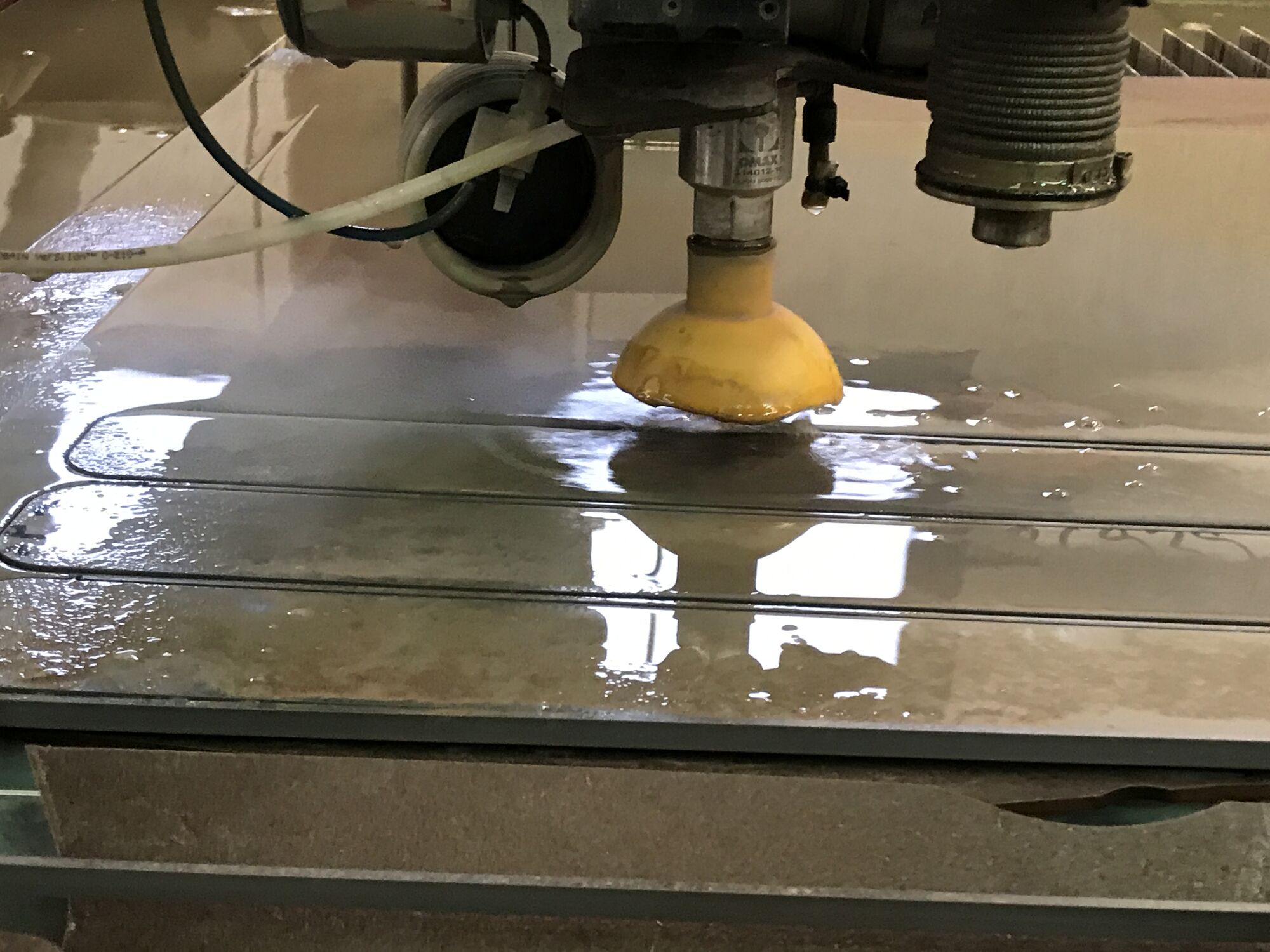
Waterjet cutting is the most versatile technology in the industrial sector for material processing. Unlike laser or plasma, it has virtually no limitations on the type of material it can cut. The reason is simple: being a cold cutting process based on mechanical erosion, it does not depend on the thermal properties or conductivity of the material.
At Cortalia, we operate 6 OMAX waterjet machines, with cutting tables up to 12 x 3.5 meters. This allows us to process large-format parts that other technologies cannot handle.
Ferrous metals
Carbon steel is one of the most commonly processed materials. Thicknesses from 1 mm to over 200 mm are cut. For thick gauges (above 40 mm), waterjet is often the only viable alternative to oxy-fuel, with the advantage of generating no heat-affected zone.
Stainless steel is cut with excellent quality up to 150 mm. Waterjet is especially valuable here because it prevents sensitization of the material in cut zones, a common problem with thermal processes that can cause intergranular corrosion.
Tool steels, hardened steels, and high-strength steels are processed without altering their heat treatment or mechanical properties.
Non-ferrous metals
Aluminum and its alloys are cut from 1 to 200 mm. Waterjet is preferable to laser in aerospace alloys (2000 and 7000 series) where the heat-affected zone is unacceptable.
Titanium, essential in aerospace and medical, is cut up to 100 mm without altering its crystal structure. At Cortalia, with ISO 9100 aerospace certification, we process titanium for flight components.
Copper, brass, and bronze are cut without the difficulties that laser has with reflective materials. Thicknesses up to 100 mm are common.
Other processable metals include: nickel, inconel, hastelloy, magnesium, zinc, lead, and precious metals.
Non-metallic materials
Natural and engineered stone: granite, marble, quartzite, silestone, and porcelain are cut with precision for architecture, decoration, and industry. No micro-cracks or chipping.
Ceramics and glass: materials that laser cannot cut are processed without issues by waterjet. Tempered glass, laminated glass, and technical ceramics up to 50 mm.
Composites and carbon fiber: CFRP, GFRP, kevlar, and sandwich materials. Waterjet avoids the delamination caused by other processes.
Plastics and elastomers: PTFE, PEEK, nylon, polycarbonate, acrylic, rubber, and silicone. No edge melting or toxic fumes.
Wood and derivatives: plywood, MDF, solid wood up to 100 mm. Clean cuts without burning.
Microcutting: extreme precision
The microcutting technology we use at Cortalia achieves grooves as narrow as 0.3 mm, with tolerances below 0.1 mm. This capability is ideal for precision parts in jewelry, watchmaking, electronics, and miniaturized components.
Microcutting is achieved with reduced-diameter nozzles, controlled pressures, and optimized feed rates. The result is a fine surface finish that in many cases eliminates the need for post-processing operations.
Cortalia's differentiating capabilities
6 operational OMAX waterjet machines. Cutting tables up to 12 x 3.5 meters for large-format parts. 5-axis cutting for bevels and complex geometries. 3D cutting and rotary axis for tube and profile processing.
All parts are manufactured under a certified quality system: EN ISO 9001, EN ISO 9100 (aerospace), EN ISO 3834, UNE EN 1090, and UNE 73401 (nuclear). Complete traceability from material reception to delivery.
Have an industrial project?
Our engineering team provides free consultations. We analyze your project and propose the most efficient solution in terms of quality, lead time, and cost.