Certified Welding for Boilermaking: Key Requirements
Why Welding Certification Matters in Boilermaking
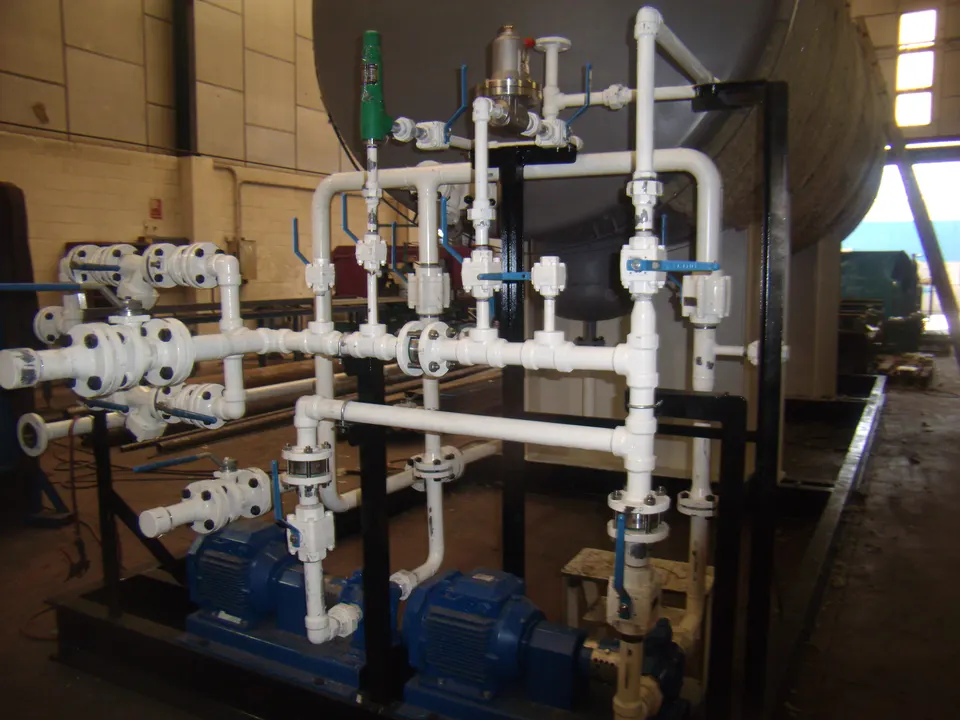
Boilermaking involves the fabrication of pressure vessels, tanks, heat exchangers, and structural steel components that must withstand extreme conditions. A single weld defect can lead to catastrophic failure, costly downtime, or safety hazards. Certification provides a systematic way to ensure that welding procedures and personnel meet industry standards.
For industrial buyers, specifying certified welding is not just a box-ticking exercise. It is a risk management tool that ensures consistency, traceability, and compliance with legal and client requirements. Without proper certification, you may face rejected parts, project delays, or liability issues.
In Spain and across the EU, the Pressure Equipment Directive (PED) and other regulations often mandate specific welding qualifications. Understanding these requirements helps you select a subcontractor who can deliver compliant work from the first weld to the last.
Core Welding Standards for Boilermaking
The two most widely recognized frameworks for welding certification are EN ISO 9606 (for welder qualification) and ASME Section IX (for welding procedure and performance qualification). EN ISO 9606 is the European standard that certifies welders based on their ability to produce sound welds in a given process, material, and position. ASME IX is commonly required for projects destined for the North American market or those following ASME codes.
In addition to these, sector-specific standards often apply. For example, EN 13445 covers unfired pressure vessels, EN 1090 applies to structural steel, and ISO 3834 defines quality requirements for fusion welding. A competent boilermaking subcontractor will hold certifications relevant to your industry.
It is important to note that having a certified welder does not automatically mean all welds are compliant. The welding procedure specification (WPS) must also be qualified through a procedure qualification record (PQR). Buyers should ask for both welder certificates and WPS/PQR documentation.
Welder Qualification: EN ISO 9606 in Practice
EN ISO 9606 is the go-to standard for welder qualification in Europe. It assesses a welder's skill by having them produce a test weld that is then examined visually, radiographically, or by other non-destructive testing methods. The qualification is limited to a specific range of variables: welding process, material group, thickness, diameter, and position.
For boilermaking, common processes include TIG (GTAW) for root passes on pipes, MIG/MAG (GMAW) for high productivity, and stick welding (SMAW) for site work or difficult positions. A welder qualified in one process cannot automatically weld with another; requalification or a new test is required.
Certificates must be renewed periodically, typically every two or three years, or when the welder's employment changes. Buyers should verify that the subcontractor's welders hold valid certificates for the exact scope of work, including the material grades (e.g., carbon steel, stainless steel, aluminum) and thicknesses involved.
ASME IX and International Projects
ASME Section IX is a code that governs the qualification of welding procedures and welders for boilers, pressure vessels, and nuclear components. It is widely used outside the US for projects with American specifications or when the end client requires ASME compliance.
Unlike EN ISO 9606, ASME IX qualification is often tied to the employer. A welder qualified under one company's quality system may need to be re-qualified if they change employers. This is a key point for buyers: ensure that the subcontractor's welders are qualified under their own quality program and that the certificates are current.
ASME IX also emphasizes the welding procedure specification (WPS) and procedure qualification record (PQR). The WPS provides the exact parameters (amperage, voltage, travel speed, preheat, etc.) that welders must follow. A robust subcontractor will have a library of qualified WPSs for common boilermaking joints and materials, reducing lead time for your project.
Sector-Specific Certifications and Quality Systems
Beyond welder and procedure qualification, many boilermaking projects require compliance with broader quality management standards. ISO 3834 is specifically designed for welding operations and defines quality requirements at three levels: comprehensive, standard, and elementary. It covers everything from welding coordination to inspection and traceability.
For pressure equipment, the Pressure Equipment Directive (PED) 2014/68/EU mandates that manufacturers have an approved quality system and that welding personnel are appropriately qualified. This often involves a notified body that audits the manufacturer's processes.
In the structural steel sector, EN 1090 is mandatory for CE marking of steel structures. It requires the manufacturer to have a factory production control system and to use certified welders and procedures. Buyers should ask for the subcontractor's certificates and verify their scope, as not all certifications cover all materials or product categories.
How to Specify and Verify Welding Quality
When requesting quotes for boilermaking work, be explicit about the required standards. State the applicable codes (e.g., EN ISO 9606 for welders, EN 13445 for pressure vessels), the materials and thicknesses, and any client-specific requirements. This allows the subcontractor to allocate properly qualified personnel and avoid surprises later.
Ask for documentation upfront: welder certificates, WPS/PQR lists, and quality system certificates (ISO 3834, ISO 9001, etc.). A reputable subcontractor will provide these without hesitation. You can also request a welding book or traceability plan that shows how each weld will be identified, inspected, and recorded.
Finally, consider an audit or pre-qualification visit if the project is critical. Seeing the workshop, the welding equipment, and the quality control process in person can give you confidence that the paperwork reflects reality. At Cortalia, we welcome such visits and are transparent about our qualifications and procedures.
Conclusion: Partner with a Qualified Welding Subcontractor
Certified welding is the backbone of safe and reliable boilermaking. By understanding the key standards and qualifications, you can specify your requirements clearly and choose a partner who will deliver compliant, high-quality welded fabrications.
At Cortalia, we maintain rigorous welder qualifications and welding procedures in line with EN ISO 9606, ASME IX, and sector-specific standards. Our team has extensive experience in boilermaking for industrial clients across Spain and the EU.
Send us your drawings and specifications for a detailed quote. We will review your requirements, confirm the applicable certifications, and propose a welding solution that meets your quality and compliance needs.
Have an industrial project?
Our engineering team provides free consultations. We analyze your project and propose the most efficient solution in terms of quality, lead time, and cost.