Industrial Cutting Tolerances: Laser, Waterjet & Bending Specs Guide
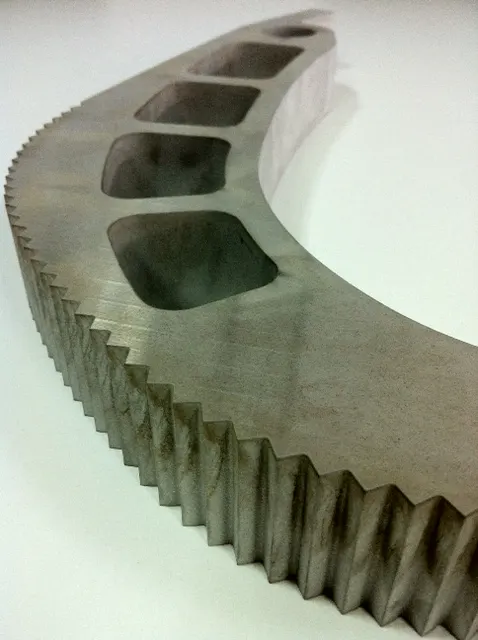
Laser Cutting: Fine Precision for Thin to Medium Plates
Fiber and CO₂ laser cutting machines typically hold dimensional tolerances within a few tenths of a millimeter on sheet metal up to about 10–12 mm thick. On thinner materials, some systems can repeatably hit even finer zones, making laser the first choice for precision components.
As plate thickness increases toward 20 mm or beyond, the kerf widens slightly and thermal effects can produce a small degree of taper. Tolerances naturally open up, but are still well within common engineering needs for most structural parts.
Edge quality from laser is generally smooth and square with minimal burr. For assemblies requiring a cosmetic finish or precise fit, a light deburr or tumbling may be specified, but often is not needed for internal features.
For hole diameters, laser can typically hold tolerances similar to the contour; small holes may exhibit a slight taper. If a tight hole tolerance is critical, reaming after cutting ensures the final fit.
Waterjet Cutting: Thick, Distortion-Free Precision
Waterjet tolerances are typically about twice as wide as laser for the same thickness, but the process shines where heat would be a problem: on thick plates, reflective metals, or layered materials.
Abrasive waterjet cutting can produce consistent part geometry in thicknesses over 100 mm, though accuracy decreases gradually with depth. The stream’s natural V‑shaped taper can be minimized with dynamic head compensation, at added cost.
If your material cannot tolerate any heat-affected zone or you need to cut right up to a machined surface, waterjet is the safest route. The edge finish resembles a fine sandblasted texture, acceptable for most structural and weld-prep applications.
Finer abrasive grits produce smoother edges but cut more slowly, affecting cost. If you need a tighter tolerance and smoother edge, specify it, but be aware that process speed may drop significantly.
Bending: Why Forming Tolerances Are Different
Bending brings material springback, grain direction, and tooling wear into play. Angular tolerances on a modern CNC press brake are often held within half a degree, but tight bend-radius requirements or multi-bend parts demand more care.
The developed flat pattern is calculated from nominal dimensions, but actual material elongation varies slightly from batch to batch. If you specify a tight linear tolerance on a bent flange, the shop may need to run test blanks and tweak the program, adding time and cost.
For the majority of enclosures, brackets, and frames, general tolerances such as ISO 2768–mK provide a perfectly functional fit, so there is rarely a benefit to calling out ±0.2 mm on every bend line.
Bend radius tolerance is influenced by the die opening and material thickness. For air bending, the radius is roughly proportional to the die width; bottom bending or coining can produce tighter radii but with higher tooling forces.
Edge Quality vs. Dimensional Accuracy
A precisely sized part can still have a sharp burr or rough edge that makes it unsafe to handle or difficult to coat. Dimensional tolerance and edge condition are separate specifications.
Laser cutting leaves a thin oxide layer and small burr on the bottom edge; waterjet leaves a matte finish with no thermal stress. If your part requires a specific edge break, chamfer, or surface finish for sealing or welding, note it on the drawing.
Designating exposed edges as ‘break sharp corners’ or defining a maximum burr height per a standard such as ISO 13715 ensures the shop does not omit a necessary secondary step.
For powder coating, a sharp edge may cause the coating to pull back, leaving a thin spot. A simple deburr or edge rounding eliminates this problem and is a small cost to specify upfront.
How to Mark Up Your Drawings for a Solid Quote
Apply tight tolerances only to the features that control fit or function. For all other dimensions, reference a standard general tolerance like ISO 2768, which is both internationally recognized and cost‑effective.
Use geometric dimensioning and tolerancing (GD&T) for features like hole patterns or critical bracket slots. A positional tolerance conveys design intent better than a set of bilateral ± dimensions, and reduces misinterpretation.
Always include material specification, thickness, and any required surface treatment. If you need a first‑article inspection report or CMM data, state it upfront; these services add time and cost, but they are routine when planned from the start.
If your assembly includes both thick and thin parts, note on the drawing whether multiple processes are acceptable. Cortalia can advise on the most economical combination of laser and waterjet cutting within one project.
Start with a Practical Specification, Get a Practical Quote
Over‑specifying tolerances is the fastest way to inflate your part cost. By understanding the natural capabilities of laser, waterjet, and bending, you can set sensible requirements that keep the project on budget and on schedule.
At Cortalia, we help industrial buyers refine their specifications and select the right process for each component. Send your drawings to our team, and we will provide a competitive quotation based on the smart, buildable tolerances you actually need.
Have an industrial project?
Our engineering team provides free consultations. We analyze your project and propose the most efficient solution in terms of quality, lead time, and cost.