Waterjet Cutting for Heavy Steel Fabrication: A Buyer's Guide
Why Waterjet Excels in Heavy Steel Fabrication
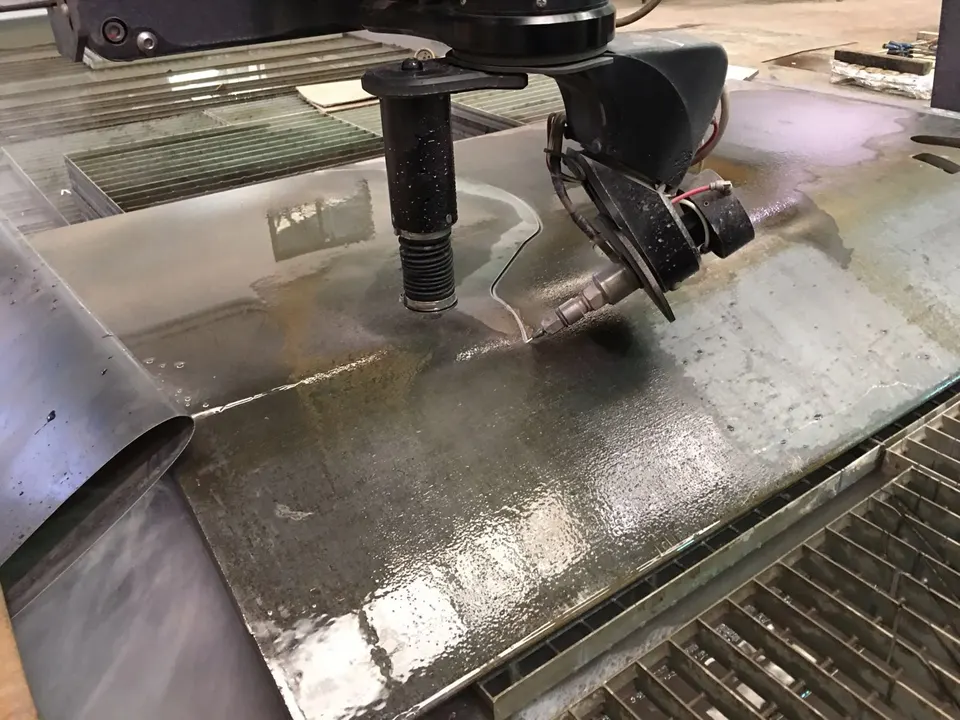
In heavy steel fabrication, cutting thick plates and complex profiles demands a process that balances precision, edge quality, and material integrity. Waterjet cutting stands out because it uses a high-pressure stream of water mixed with abrasive particles to erode material without generating heat. This cold-cutting method eliminates the heat-affected zone (HAZ) common in thermal processes like plasma or laser cutting.
For fabricators working with high-strength steels, armor plate, or wear-resistant alloys, avoiding heat input is critical. Thermal cutting can alter the microstructure near the cut edge, leading to hardening, cracking, or distortion. Waterjet preserves the base material properties, so subsequent welding, machining, or heat treatment proceeds without surprises.
Moreover, waterjet handles a wide range of thicknesses—from thin sheet to very thick plate—with a single setup. While other methods may struggle with extreme thicknesses or require multiple passes, waterjet can often cut through in one pass, albeit at slower speeds as thickness increases. This capability makes it a versatile choice for job shops and OEMs dealing with diverse heavy fabrications.
Material Compatibility and Edge Quality
Waterjet cutting is material-agnostic: it cuts any electrically conductive or non-conductive material. For heavy fabrication, this includes carbon steels, stainless steels, aluminum, titanium, nickel alloys, and even composites or layered materials. Unlike plasma, which requires electrical conductivity, waterjet can handle coated or painted metals without pre-cleaning, saving time.
The edge quality from waterjet is typically smooth and free of dross or slag, reducing secondary finishing operations. The cut surface often resembles a sandblasted finish, which is acceptable for many applications without further work. For critical fit-up or welding, the edge may need only light dressing, if any.
Another advantage is the absence of micro-cracking or edge hardening. In thick sections, thermal cutting can induce stresses that lead to distortion or cracking, especially in high-carbon or alloy steels. Waterjet's cold process avoids these issues, resulting in parts that are flat and dimensionally stable—a key requirement in heavy fabrication where parts must fit together precisely.
Thickness Capabilities: What to Expect
Waterjet systems can cut extremely thick materials, far beyond the practical limits of laser and often exceeding plasma capabilities for quality cuts. While exact thickness limits depend on machine power, abrasive type, and material, it is common for industrial waterjet machines to cut steel plate several inches thick. However, as thickness increases, cutting speed decreases significantly, and the kerf width may widen.
For heavy fabrication, typical plate thicknesses encountered are well within waterjet's comfort zone. Thicknesses that challenge other methods—such as several centimeters of stainless or high-strength steel—are routinely processed. The key is to balance precision requirements with production speed; waterjet may be slower than plasma on very thick mild steel, but it offers superior edge quality and no heat distortion.
When specifying thick parts, consider the taper inherent in waterjet cutting. The stream tends to widen slightly as it exits the material, creating a small angular deviation on the cut face. For many applications this taper is negligible, but for precision fits, secondary machining or taper compensation may be needed. Discussing these details with your cutting service provider ensures expectations are aligned.
Tolerances and Precision in Heavy Sections
Waterjet cutting is known for its accuracy, often achieving tolerances comparable to laser cutting on thinner materials. In heavy sections, maintaining tight tolerances becomes more challenging due to stream dynamics and material variations, but waterjet still outperforms many thermal methods. Typical positional accuracy is excellent, and repeatability is high, making it suitable for parts that require consistent dimensions across batches.
For heavy fabrication, where parts may be large and heavy, dimensional stability is paramount. Waterjet's lack of heat input means parts do not warp or move during cutting, preserving the programmed geometry. This is a significant advantage over plasma or oxy-fuel, which can cause significant distortion in thick plates.
When specifying tolerances, be realistic about the process capabilities. For critical features, consider adding a finishing allowance or specify tighter tolerances only where functionally necessary. A good waterjet shop will advise on achievable tolerances based on material and thickness, helping you avoid over-specifying and driving up costs.
Specifying Waterjet Cut Parts for Quotes
To obtain accurate quotes for waterjet cutting of heavy fabrication parts, provide complete and clear specifications. Start with detailed drawings (DXF, DWG, or step files) that include all dimensions, hole sizes, and edge requirements. Indicate material grade, thickness, and any surface condition (e.g., mill scale, painted).
Specify edge quality expectations: do you need a smooth, ready-to-weld edge, or is a rougher cut acceptable? Mention if any secondary operations are required, such as tapping, countersinking, or beveling. For thick parts, note if taper is a concern and whether you require taper compensation or post-machining.
Also communicate quantity, delivery timeline, and any special handling needs (e.g., part weight, size). This information allows the cutting service to optimize nesting, select the right abrasive and nozzle, and schedule production efficiently. The more detail you provide, the more accurate and competitive the quote will be.
Cost Considerations for Heavy Waterjet Cutting
Waterjet cutting cost is driven primarily by machine time, which depends on material thickness, hardness, and desired edge quality. Thicker materials require slower cutting speeds and more abrasive consumption, increasing cost per part. However, the elimination of secondary operations like grinding or straightening can offset higher cutting costs.
For heavy fabrication, consider the total cost of ownership: a waterjet cut part may cost more per linear inch than plasma, but if it arrives flat, with clean edges and no HAZ, it saves time and money downstream. This is especially true for high-value alloys or parts that undergo expensive machining or welding.
When comparing quotes, ensure you are comparing like for like in terms of edge quality and tolerances. A lower price might reflect a rougher cut or less precise work. Ask about the machine's capabilities, abrasive type, and quality control procedures to ensure you get the value you expect.
Partner with Cortalia for Your Heavy Fabrication Cutting
Cortalia specializes in waterjet cutting for demanding industrial applications, including heavy steel fabrication. Our facility in Coslada, Madrid, is equipped to handle thick plates, complex profiles, and high-strength materials with precision and repeatability. We work with fabricators across Spain and the EU, delivering parts that meet stringent quality standards.
We understand the challenges of heavy fabrication: tight tolerances, material integrity, and on-time delivery. Our team can advise on design for manufacturability, helping you optimize parts for waterjet cutting to reduce cost and improve quality. Whether you need prototypes or production runs, we have the capacity and expertise.
Send us your drawings and specifications for a detailed quote. We will review your requirements and provide a competitive offer, along with technical recommendations to ensure your parts are cut right the first time. Contact Cortalia today to discuss your next heavy fabrication project.
Have an industrial project?
Our engineering team provides free consultations. We analyze your project and propose the most efficient solution in terms of quality, lead time, and cost.