Waterjet Cutting Thick Materials: A Guide for Boilermaking and
Why Waterjet for Thick Sections?
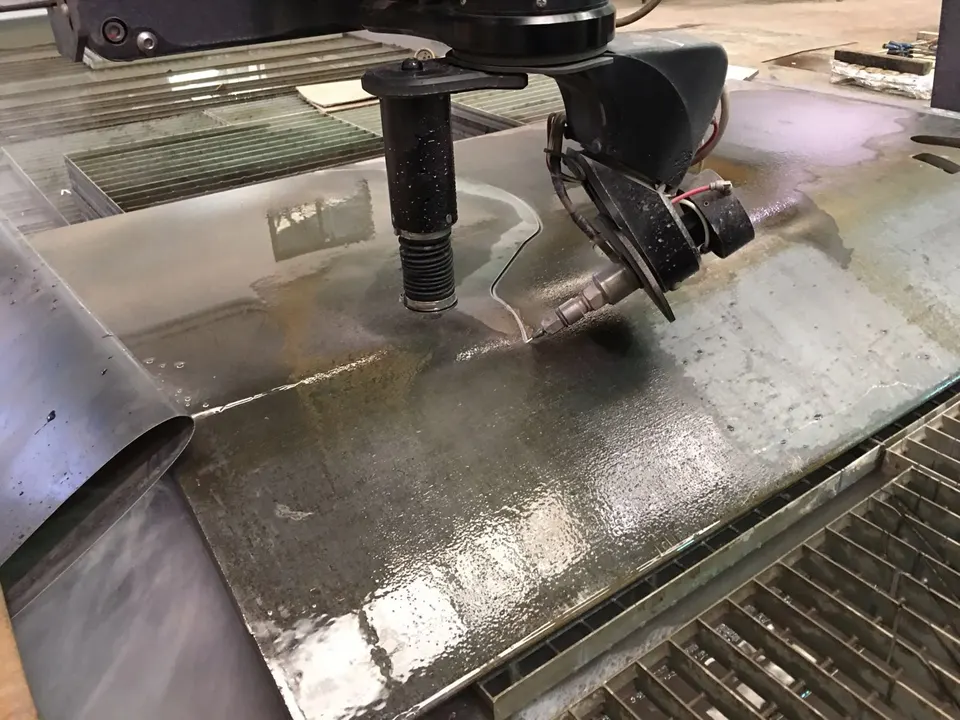
When your project involves plate thicknesses that push the limits of conventional thermal cutting, waterjet technology offers a compelling alternative. Unlike laser or plasma, waterjet cutting is a cold process that introduces no heat-affected zone, preserving the metallurgical properties of the base material. This is critical in boilermaking and petrochemical applications where weldability and corrosion resistance must be maintained.
For thick materials—often defined as those beyond the practical range of high-power laser systems—waterjet delivers consistent quality without the distortion or hardening associated with thermal methods. The process uses a high-velocity stream of water mixed with abrasive particles to erode material precisely, making it suitable for a wide range of alloys and non-metals.
Material Capabilities for Heavy Industry
Waterjet cutting excels on the materials commonly specified in boilermaking and petrochemical projects. Carbon steel plates, stainless steel, duplex and super-duplex stainless, nickel alloys, and titanium can all be cut cleanly at substantial thicknesses. The process is equally effective on non-ferrous metals like copper and aluminum, as well as on composites and layered materials that would be problematic for thermal cutting.
One key advantage is the ability to cut materials in their final heat-treated condition without altering mechanical properties. For pressure vessel components or piping flanges, this means no post-cut heat treatment is required solely because of the cutting method. Additionally, waterjet can handle clad materials and dissimilar metal sandwiches without delamination, a common issue with other processes.
Precision and Edge Quality Expectations
While waterjet is not typically considered a high-precision process compared to wire EDM, it offers more than adequate accuracy for most heavy fabrication needs. Typical tolerances are well within the requirements for weld prep and final fit-up in boilermaking. The cut edge exhibits a characteristic taper, which becomes more pronounced as thickness increases, but this can be managed through proper parameter selection and, if necessary, secondary operations.
Edge quality from waterjet cutting is generally smooth and free of dross or slag, reducing the need for grinding before welding. The surface finish is comparable to a fine machined finish in many cases, and the absence of a heat-affected zone means no micro-cracking or hardness changes at the cut face. This is especially valuable for materials prone to hydrogen embrittlement or sensitization.
Specifying Waterjet Work for Accurate Quotes
To receive accurate quotations, provide complete information about your requirements. Start with the material specification: grade, thickness, and any special conditions such as heat treatment or surface finish. Indicate the required edge quality—whether the parts will be welded, machined, or used as-cut—and specify any critical dimensions or tolerances that must be held.
Include the full set of drawings or CAD files, and note whether nesting of multiple parts is acceptable. For thick materials, consider the kerf width and the minimum internal radius that the waterjet can produce. These factors affect material utilization and part design. Also, state any post-cut requirements such as stress relieving or surface preparation, as these may influence the cutting parameters chosen by the supplier.
Design Considerations for Thick Parts
When designing parts for waterjet cutting in thick materials, several factors warrant attention. The jet stream diverges slightly as it exits the nozzle, creating a taper that can affect hole diameters and slot widths. For precision fits, consider specifying a secondary reaming or boring operation for critical holes. Internal corners will have a small radius, typically a fraction of the material thickness, so avoid sharp internal corners unless a secondary machining step is planned.
Part geometry also influences cutting speed and cost. Very thick sections cut more slowly, and intricate profiles with many pierce points increase cycle time. Where possible, arrange parts to share common cut lines and minimize pierces. The use of common-line cutting and effective nesting can significantly reduce material waste and overall cost, a key consideration for large boilermaking projects with many repetitive parts.
Quality Assurance and Project Documentation
In petrochemical and pressure equipment fabrication, documentation and traceability are paramount. A qualified waterjet cutting supplier should provide material test reports, dimensional inspection data, and process documentation as needed. For critical components, additional testing such as dye penetrant inspection of cut edges or ultrasonic testing of the base material can be coordinated.
Discuss your quality requirements upfront. Many fabricators require certified material traceability from the cutting service, especially when working with high-alloy steels or exotic materials. Clarify who is responsible for material procurement and what documentation will accompany the cut parts. This avoids delays and ensures compliance with project specifications and industry codes.
Partnering with Cortalia for Your Thick-Plate Cutting Needs
Cortalia has extensive experience in waterjet cutting for heavy industry, serving clients across Spain and the European Union. Our facility in Coslada, Madrid, is equipped to handle large-format thick plates with precision and efficiency. We understand the demands of boilermaking and petrochemical projects and can assist with material selection, design for manufacturability, and tight delivery schedules.
If you have a project requiring waterjet cutting of thick materials, send us your drawings and specifications. Our team will review your requirements and provide a competitive quotation with clear lead times. Let us help you achieve the quality and performance your project demands.
Have an industrial project?
Our engineering team provides free consultations. We analyze your project and propose the most efficient solution in terms of quality, lead time, and cost.