Waterjet Cutting Tolerances: A Practical Guide for Industrial Buyers
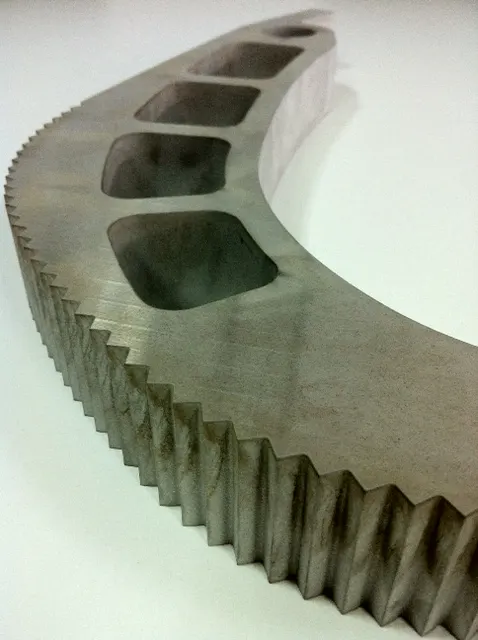
Why Waterjet Tolerances Matter in Your Parts
When you send a drawing for waterjet cutting, the tolerance callouts determine whether the part fits its assembly, how much secondary machining you avoid, and what you pay. Over-specifying tolerances drives up cost unnecessarily; under-specifying leads to rejected parts and production delays. Understanding what waterjet cutting can realistically achieve helps you set expectations and get competitive quotes.
Waterjet cutting is known for its versatility across materials and thicknesses, but precision is not a single number. It depends on the material type, thickness, machine quality, and the skill of the operator. This guide gives you practical rules of thumb to specify tolerances confidently and avoid quality issues.
Typical Tolerance Ranges by Material and Thickness
A common misconception is that waterjet cutting holds the same tolerance regardless of part size or material. In practice, thinner materials generally allow tighter tolerances, while thicker materials introduce more variability due to jet lag and taper. For example, cutting thin sheet metal can achieve a higher degree of accuracy than cutting thick steel plate, but even then, the achievable tolerance is not uniform across the entire cut.
As a rule of thumb, in standard production, waterjet cutting can hold tolerances in the range of a few tenths of a millimetre for thin materials, but this relaxes as thickness increases. For thicker sections, expect tolerances in the range of a few tenths to a millimetre, depending on the material. Always discuss your specific requirements with your cutting supplier, as they can advise on what is achievable for your exact part geometry.
The Impact of Material Type on Tolerance
Material hardness and composition affect how the waterjet stream behaves. Harder materials like tool steel or titanium tend to produce cleaner edges and hold tolerances differently than softer materials like aluminium or plastics. Soft materials can exhibit more edge rounding or burring, which may affect the effective tolerance on the part.
For example, cutting thick aluminium may produce a slight taper that is not present in steel. Similarly, abrasive waterjet cutting of composites or ceramics requires different parameters. When specifying tolerances, always consider the material's response to cutting. Your supplier can guide you on what is typical for your chosen material, but be prepared to allow slightly looser tolerances for difficult-to-cut materials.
How to Specify Tolerances on Your Drawings
The best way to avoid confusion is to specify tolerances using standard ISO or ASME conventions. On your drawing, indicate the critical dimensions with a tolerance, and for non-critical dimensions, use a general tolerance block. This tells the machinist which features are essential and which are not.
Be realistic: only apply tight tolerances to features that truly need them, such as mating surfaces or hole locations. Over-tolerancing every dimension will increase cost and may even make the part impossible to cut without secondary operations. Also, consider the part size: a large part with a tight tolerance across its entire length is harder to achieve than a small part because of thermal and mechanical effects during cutting.
The Cost Drivers: Tolerance, Thickness, and Complexity
Tolerances directly affect cost because tighter tolerances require slower cutting speeds, more precise machine calibration, and often additional inspection. Thicker materials also require more time and abrasive, increasing cost. Complex geometries with sharp corners or small features add cutting time and may require rework if tolerances are too tight.
A practical approach is to group your parts into critical and non-critical categories. For critical features, specify the tightest tolerance you truly need; for the rest, use a standard industrial tolerance that waterjet can easily hold. This balance helps you get a fair price without sacrificing function. Always ask your supplier for a tolerance analysis if you are unsure—they can often suggest a more economical approach.
Common Pitfalls and How to Avoid Rejections
One common pitfall is assuming that waterjet cutting produces perfectly square edges. In reality, there is always a slight taper, especially in thicker materials. If your design requires a perfectly square edge, you may need to specify a tighter tolerance and accept a subsequent machining pass, or adjust your design to accommodate the natural taper.
Another pitfall is ignoring the effect of abrasive quality and nozzle wear, which can cause dimensional drift during long runs. Reputable suppliers monitor these parameters, but you should agree on inspection methods and acceptance criteria upfront. Clear communication about which dimensions are critical and how they will be measured prevents disputes and ensures the parts meet your needs.
Practical Steps for Requesting Realistic Quotes
To get an accurate quote, provide a complete drawing with material, thickness, and tolerance callouts. Include a note on the intended use of the part, as this helps the supplier understand which features are critical. If you are unsure about achievable tolerances, ask for a recommendation rather than guessing.
Finally, remember that waterjet cutting is a cost-effective process for many applications, but it is not a substitute for grinding or wire EDM when extreme precision is required. For most industrial parts, waterjet offers an excellent balance of accuracy and cost. If you have a part in mind, send your drawings to Cortalia for a detailed quote. Our team will review your tolerances and suggest the most efficient way to produce your parts without compromising quality.
Have an industrial project?
Our engineering team provides free consultations. We analyze your project and propose the most efficient solution in terms of quality, lead time, and cost.